Clear breakdown of the new deductions taking effect in 2025 — and how working families and seniors can benefit.
Tax documents with calculator and car keys representing new deductions under the One, Big, Beautiful Bill Act for tips, overtime, car loan interest, and seniors
An at-a-glance look at key 2025 tax deductions under the One, Big, Beautiful Bill Act, showing relief for tip workers, overtime earners, car buyers, and seniors.
On July 4, 2025, the One, Big, Beautiful Bill Act was signed into law as Public Law 119-21. Beginning in tax year 2025, it introduces several temporary deductions aimed at working Americans and seniors. These provisions run from 2025 through 2028 and are designed to reduce taxable income — not eliminate taxes entirely, but lower the amount of income subject to tax.
Here’s what that means in plain language.
Why This Matters
A tax deduction reduces your taxable income. If you qualify, you subtract the allowed amount from your income before calculating what you owe. That can lower your total tax bill.
These deductions are available whether you itemize or take the standard deduction. That’s important. In past tax law, many benefits required itemizing. Not here.
Workers who receive tips may deduct qualified tips up to $25,000 per year.
Qualified tips must:
Be voluntary cash or charged tips • Be reported on a Form W-2, 1099, or directly on Form 4137 • Come from occupations the IRS identifies as “customarily and regularly” receiving tips before December 31, 2024
The deduction phases out for incomes above $150,000 ($300,000 for joint filers).
Self-employed individuals in certain specified service trades are excluded, and married taxpayers must file jointly to claim the deduction.
The IRS is required to publish the official occupation list by October 2, 2025.
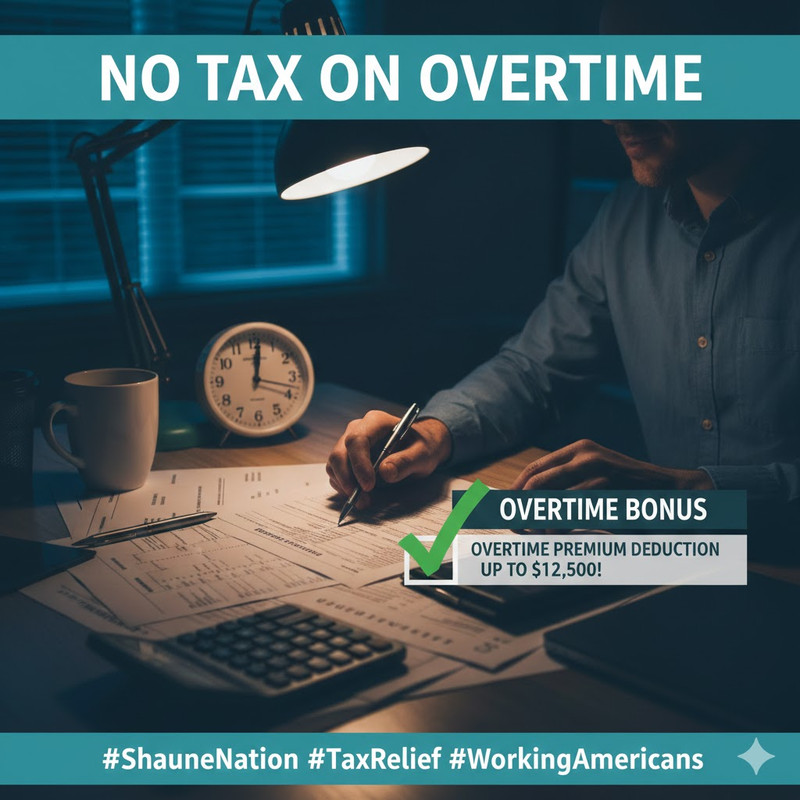
A visual summary of new 2025 tax deductions that eliminate federal income tax on qualified tips and overtime pay, offering targeted relief for hourly and service-based workers.
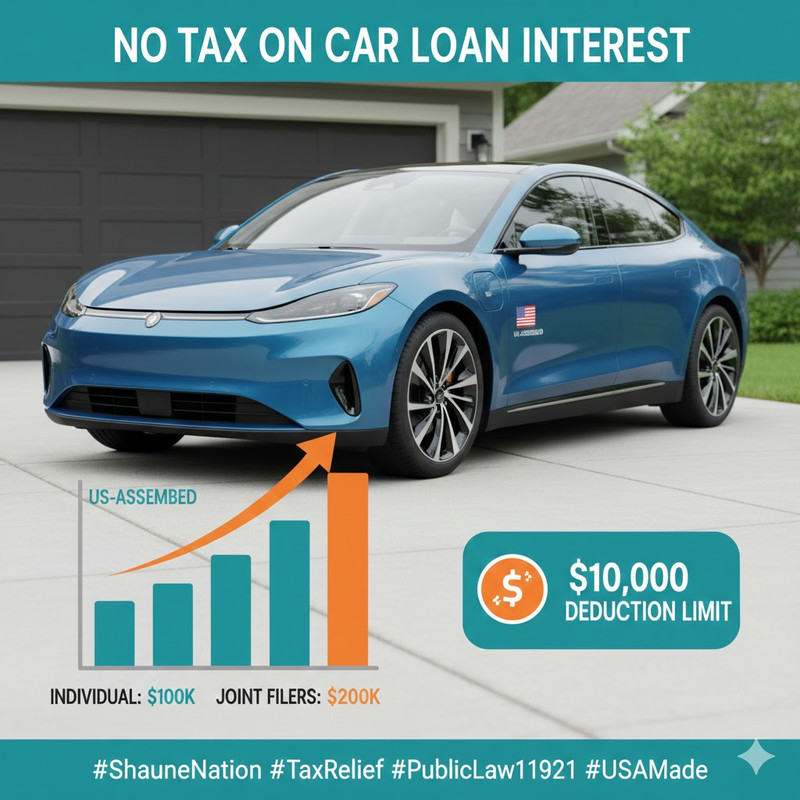
A new 2025 tax deduction allows eligible buyers to deduct up to $10,000 per year in interest paid on qualifying car loans for U.S.-assembled vehicles purchased for personal use.
For new vehicles purchased for personal use after December 31, 2024, individuals may deduct up to $10,000 per year in loan interest.
Key requirements:
Loan must originate after 2024 • Vehicle must be new (original use starts with taxpayer) • Must be for personal use • Must be secured by a lien • Vehicle must undergo final assembly in the United States
Final assembly location can be confirmed via the vehicle label or the VIN using resources from the National Highway Traffic Safety Administration.
Income phaseout begins at $100,000 ($200,000 joint).
Taxpayers age 65 or older can claim an additional $6,000 deduction — per eligible individual — on top of the existing senior standard deduction.
That means up to $12,000 extra for married couples where both spouses qualify.
Phaseout begins at $75,000 ($150,000 joint).
What This Means in Real Life
These provisions are temporary (2025–2028). They reduce taxable income, not payroll taxes. Eligibility rules and reporting requirements matter. Social Security Numbers and joint filing requirements apply in several sections.
This law doesn’t erase taxes. It narrows them for specific types of income and specific groups.
The structural theme is targeted relief:
Tip earners • Overtime workers • Buyers of U.S.-assembled vehicles • Seniors
Each deduction includes income limits and reporting safeguards.
The deeper takeaway is practical: tax law often changes in ways that reward awareness. Most people don’t lose money because rules are hostile. They lose money because they don’t know what applies to them.
Staying informed isn’t political. It’s mechanical. And mechanics matter.
Disclaimer: This content is intended for informational purposes only and is not a substitute for professional tax advice. Tax laws are complex and subject to change. Always consult a qualified tax professional regarding your specific situation. ShauneNation is not responsible for any outcomes resulting from the use of this information.